Launch your career in advanced manufacturing with our accelerated AS degree in Industrial Automation and Robotics Technology, preparing you to operate, troubleshoot, and improve the automated systems driving today’s industries.

1.5 Years

PM Classes

On-Campus

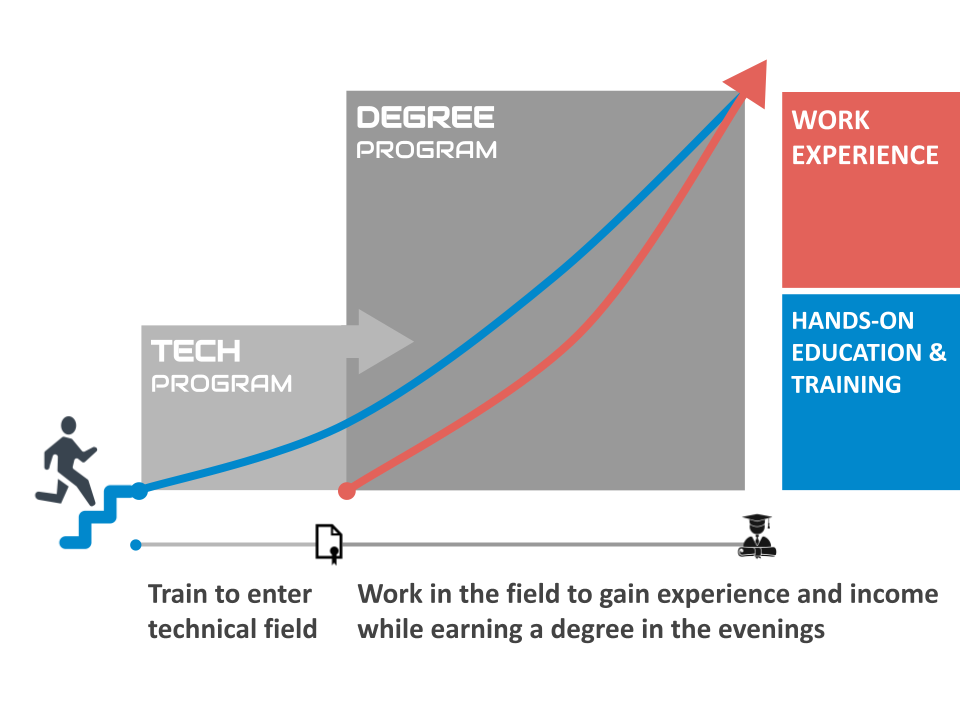
Front-loaded Design: Start by completing the Industrial Automation Technology Diploma, then gain field experience while pursuing your degree to advance your career.

Request More Info

Submit form for more program information.

We Respect Your Privacy. Information submitted on this form is sent to the SCIT Admissions Department and is not shared with any third parties.

Request More Info

Submit form for more program information.

We Respect Your Privacy

Information submitted on this form is sent to the SCIT Admissions Department and is not shared with any third parties.

INDUSTRIAL AUTOMATION & ROBOTICS TECHNOLOGY

Program Overview

The Associate of Science in Industrial Automation and Robotics Technology program is designed to build upon the foundational skills developed in the Industrial Automation Technology diploma, preparing students for more advanced roles in modern manufacturing and automated systems environments. This program deepens students’ expertise in industrial controls while introducing advanced automation concepts that are increasingly critical in today’s smart factories.

Students expand their knowledge of programmable logic controllers (PLCs) through advanced topics such as human-machine interface (HMI) development, industrial networking, and the integration of multiple PLC systems. In addition to strengthening their Allen-Bradley skillset, students are introduced to SIEMENS PLC platforms, broadening their versatility and adaptability across diverse industrial settings.

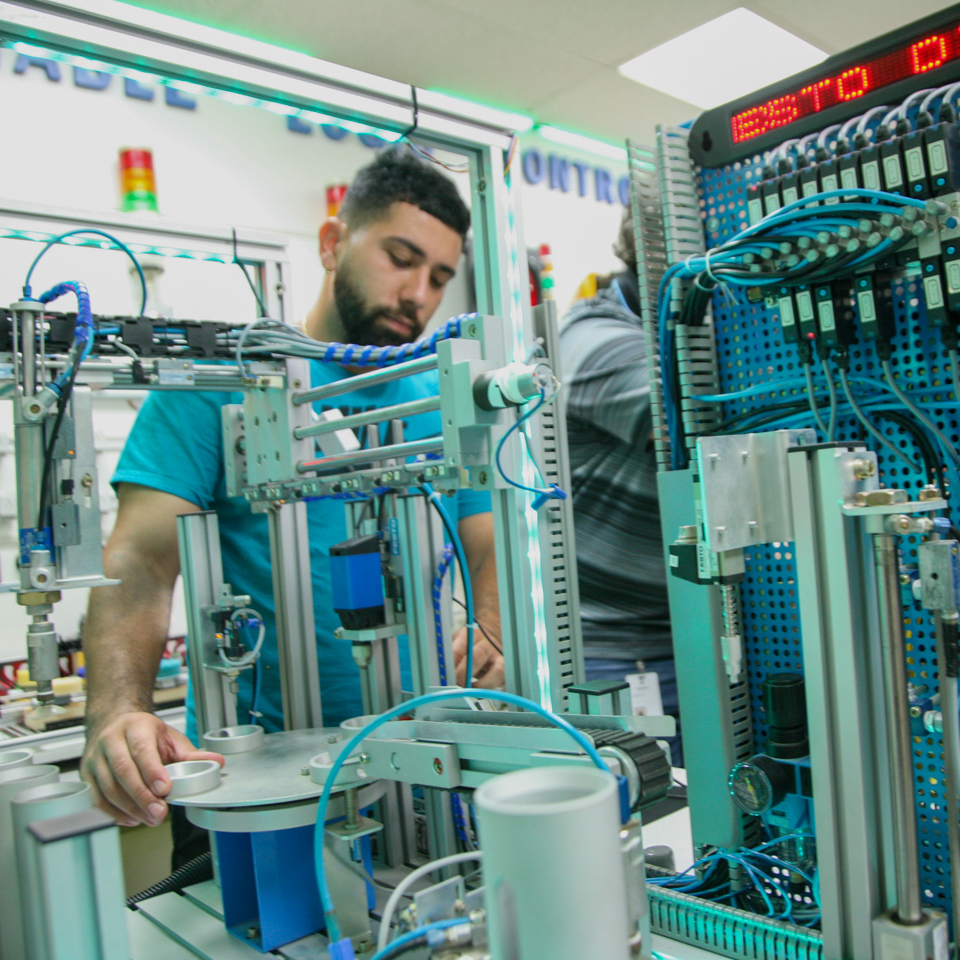
A key component of the program is hands-on training in industrial robotics, with a focus on FANUC robotic systems. Students gain practical experience in robot programming, operation, and integration within automated production environments, equipping them with skills highly sought after in advanced manufacturing.

The program culminates in a comprehensive capstone project in which students build and integrate a functional automated system. Working with components such as PLCs, robotics, sensors, and control systems, students collaborate to develop an assembly line that simulates real-world industrial applications. This experience reinforces technical competencies while developing problem-solving, teamwork, and system integration skills.

Graduates of this program are prepared for roles such as automation technician, robotics technician, controls technician, and maintenance technician in industries including manufacturing, logistics, and industrial systems integration. The program also provides a strong foundation for continued professional growth in the rapidly evolving field of industrial automation.

The AS Industrial Automation & Robotics Technology program is offered in the following formats:


PRIMARILY ON-CAMPUS
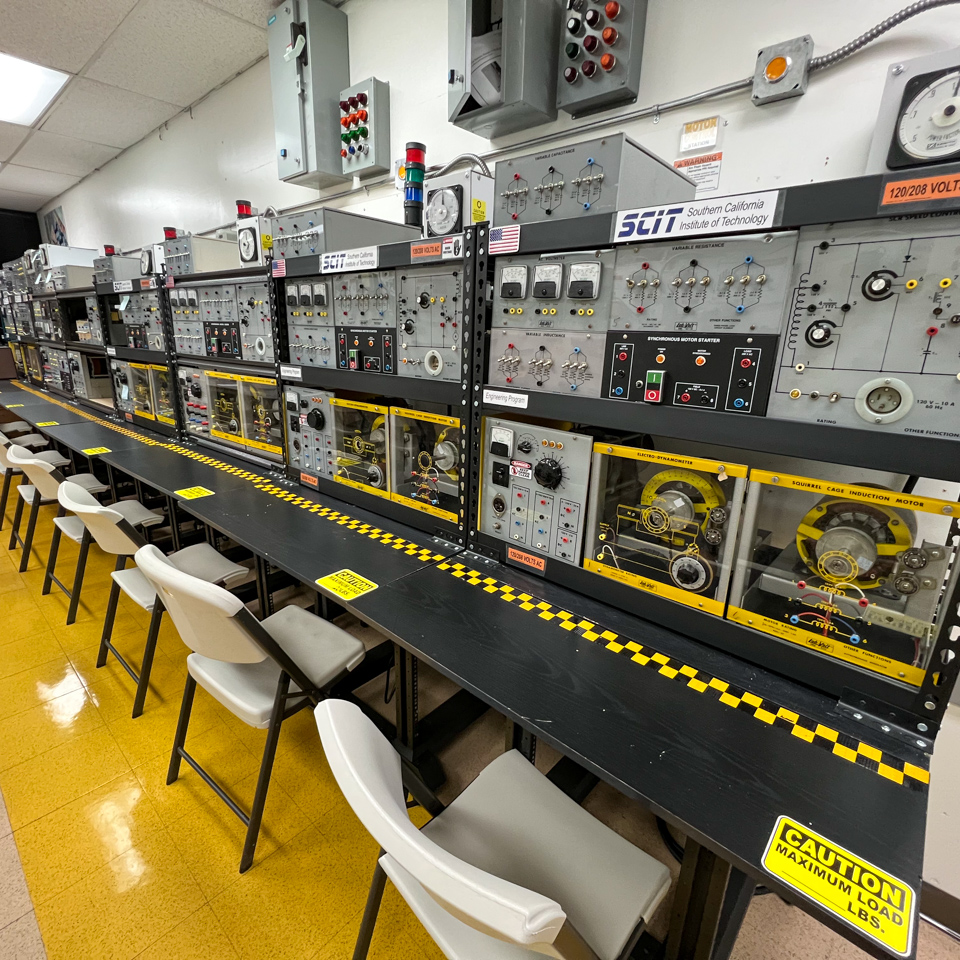
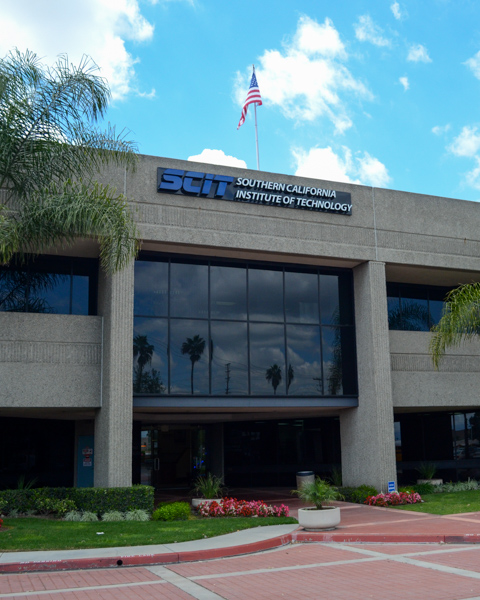
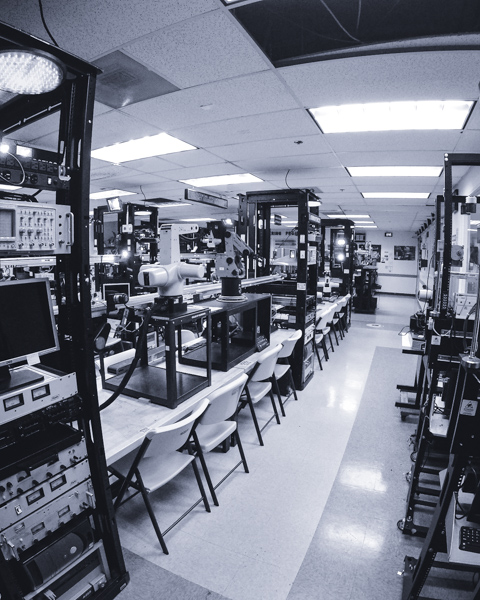
Courses are primarily offered on-campus (in-person) utilizing SCIT's instructional lab facilities. Some courses may be offered online.


A.S.I.A.R.T Curriculum

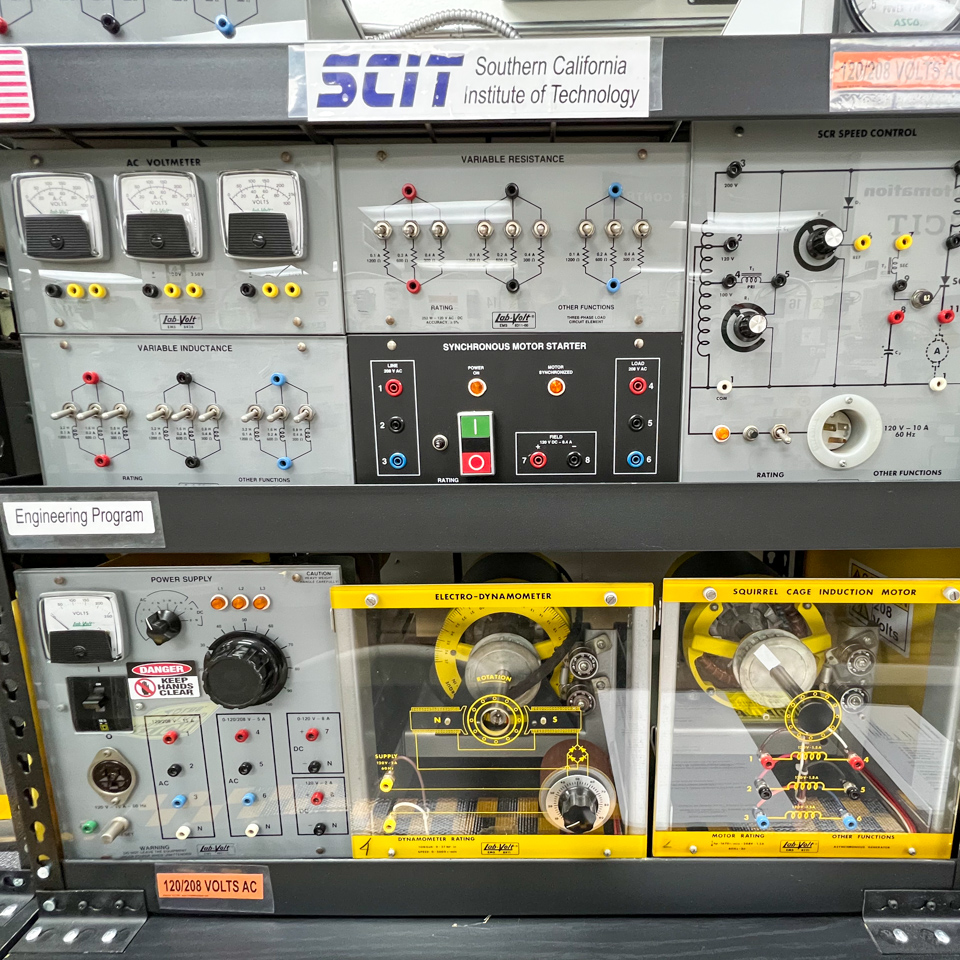
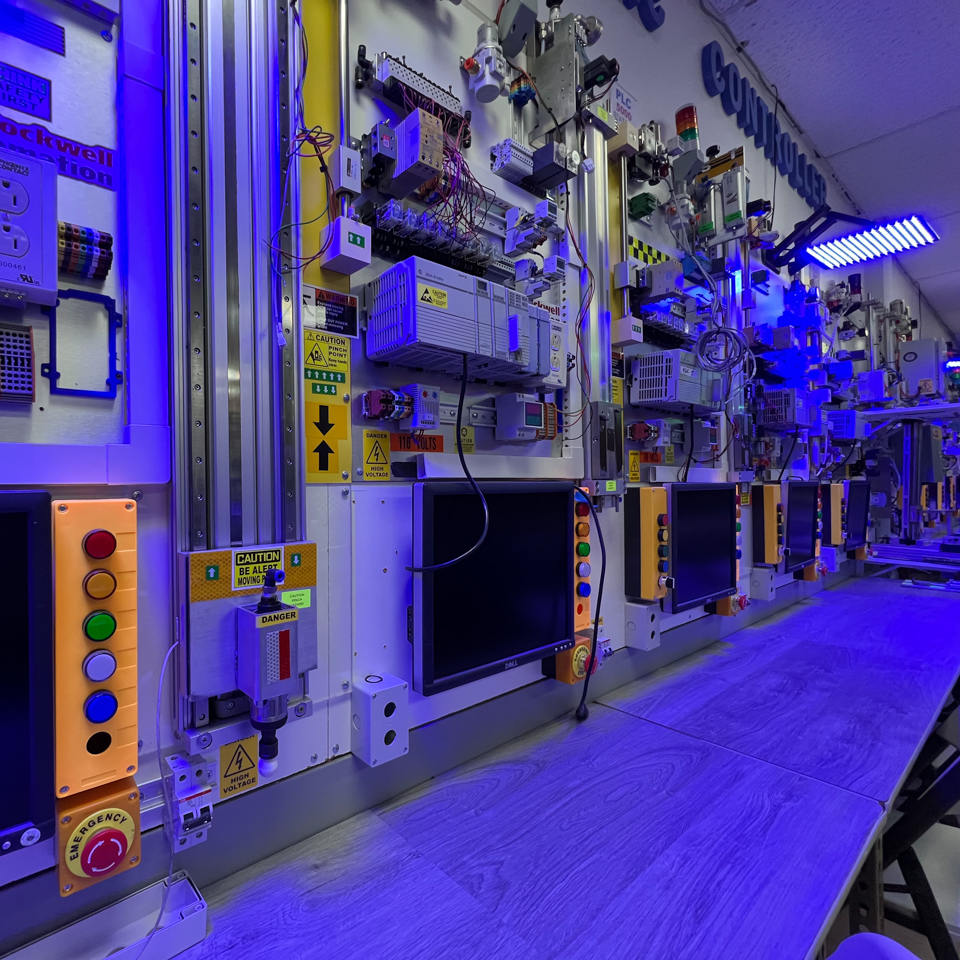
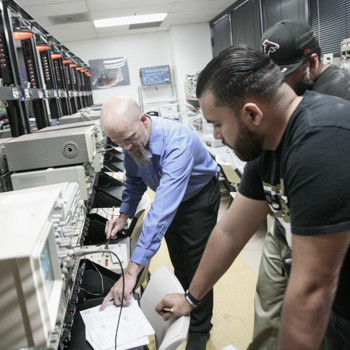
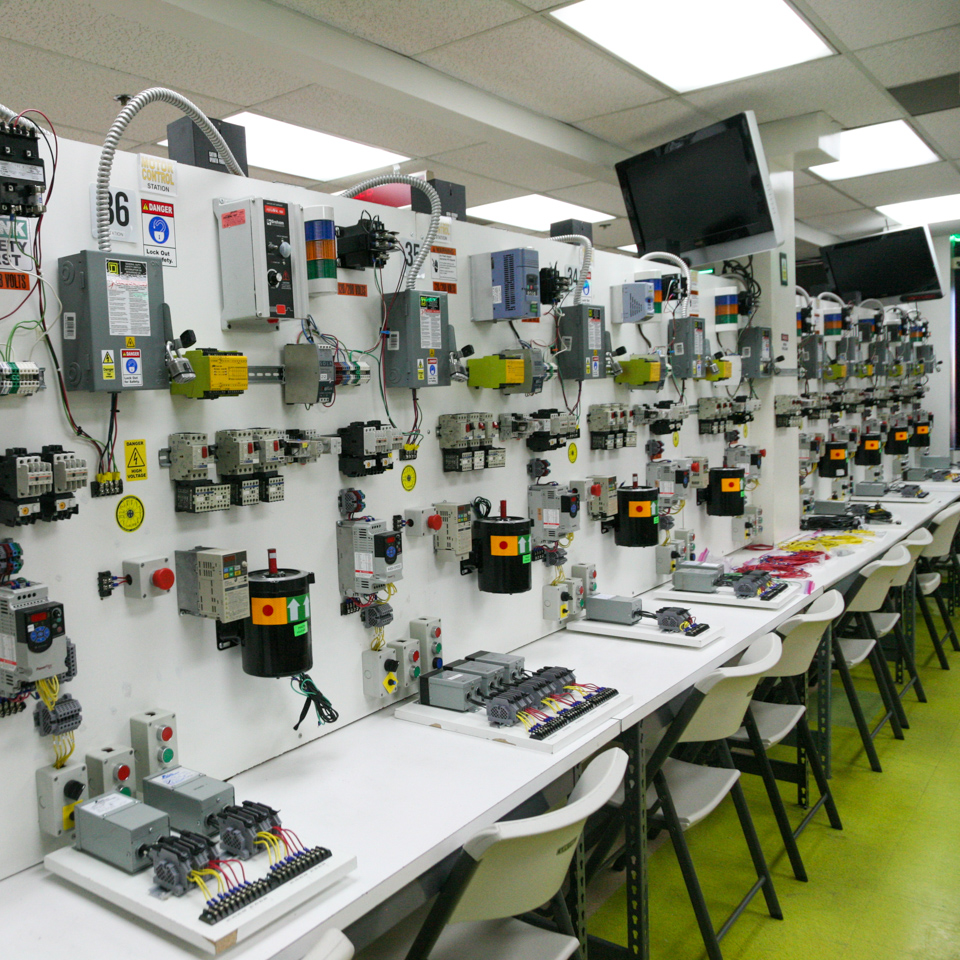
The A.S.I.A.R.T. program’s curriculum is designed to support a hands-on based learning experience that develops practical engineering skills and reinforces theory. To support our curriculum, SCIT heavily invests in expansive instructional laboratories and trainers equipped with wide-ranging, real-world industrial devices spanning various engineering disciplines. Below you will find a list of all courses required for the program*

QUARTER CREDIT UNITS: 91 Units

Indicates Lab Course

Technical


Course Code Course Title Units
ELE110Electric Motor Control4
ELE110LElectric Motor Control Lab2
ELE112Advanced Electric Motor Control4
ELE112LAdvanced Electric Motor Control Lab2
ELE130Industrial Electrical Fundamentals4
ELE130LIndustrial Electrical Fundamentals Lab2
ELE250Introduction to Industrial Robotics2
ELE250LIntroduction to Industrial Robotics Lab2
IS100Computer Network Fundamentals4
IS100LComputer Network Fundamentals Lab2
MAN100Occupational Safety and Health Administration (OSHA) Standards for General Industry1
MAN130Programmable Logic Controllers4
MAN130LProgrammable Logic Controllers Lab2
MAN132Advanced Programmable Logic Controllers4
MAN132LAdvanced Programmable Logic Controllers Lab2
MAN140Hydraulic & Pneumatic Automation Technology4
MAN140LHydraulic & Pneumatic Automation Technology Lab2
MAN230PLC Systems and Industrial Controls4
MAN230LPLC Systems and Industrial Controls2
MAN235PLC Multi-Platform Applications4
MAN235LPLC Multi-Platform Applications Lab2
MAN290LIndustrial Controls Integration Lab2
NEC100Introduction to Electricity and National Electrical Code4
NEC100LIntroduction to Electricity and National Electrical Code Lab

Math & Science


Course Code Course Title Units
MT103Foundations of College Mathematics1
MT121College Algebra I4
MT122College Algebra II4

Humanities


Course Code Course Title Units
CD101Career Readiness1
GE102Composition and Critical Thinking2
GE102LCollege Writing1
GE202Introduction to Technical Communication2
GE202LTechnical Writing1
GE250General Psychology3
GE260Principles of Oral Communication2
GE350Organizational Behavior3

* Every effort has been taken to maintain an up to date list of courses on this site. Courses are subject to change. Official course lists can be found in the most recently published school catalog.

A.S.I.A.R.T. Learning Outcomes & Careers

The program enables graduates to pursue careers in industrial automation, robotics, manufacturing, and related technical fields. Through hands-on training in electrical, mechanical, and control systems, students develop the skills needed to support the operation, maintenance, troubleshooting, and integration of modern automated equipment and industrial processes.

Student learning outcomes include:

  1. an ability to apply fundamental principles of electrical, mechanical, and control systems to operate, maintain, and troubleshoot automated and electromechanical equipment
  2. an ability to interpret and analyze technical documents, including wiring diagrams, schematics, PLC ladder logic, datasheets, and equipment manuals, to support system installation, testing, and repair
  3. an ability to configure, program, and troubleshoot programmable logic controllers (PLCs) and related industrial control devices used in automated manufacturing and process systems
  4. an ability to install, calibrate, and maintain sensors, actuators, electric motors, and robotic devices
  5. an ability to use appropriate tools, instrumentation, and diagnostic equipment to evaluate system performance and identify faults in electrical, mechanical, and control subsystems
  6. an ability to integrate components of industrial automation systems
  7. an ability to communicate technical information effectively, both orally and in writing
  8. an ability to function as team members in a technical environment

Key Program
TOPICS

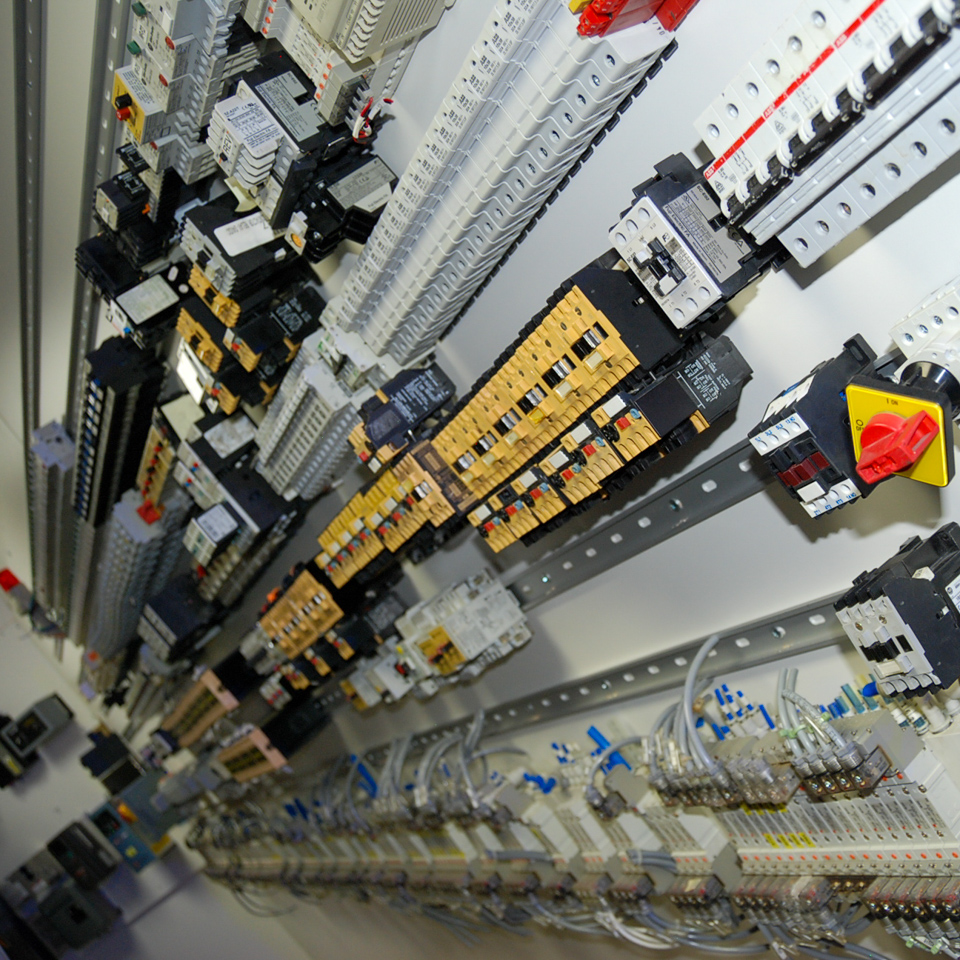
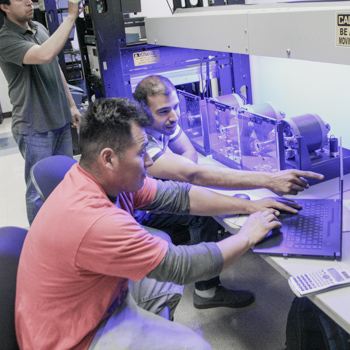
Learn by working hands-on with real industrial devices including different types of electric motors, Allen Bradley and SIEMENS PLCs, FANUC Robots, pneumatic devices, and much more. Explore key topics below:

Take your PLC skills to the next level by working with advanced ControlLogix and CompactLogix systems, HMI development, and industrial communication networks. Learn how to design, program, and troubleshoot interconnected PLC systems that power modern automated facilities.

Gain hands-on experience with FANUC industrial robots, the global standard in manufacturing automation. Learn robot programming, operation, and system integration to perform tasks such as material handling, assembly, and automated production.

Bring it all together in a hands-on capstone experience where you design and build a fully integrated automated system. Combine PLCs, robotics, HMIs, sensors, and control systems to create a functional assembly line that mirrors real-world industrial environments.

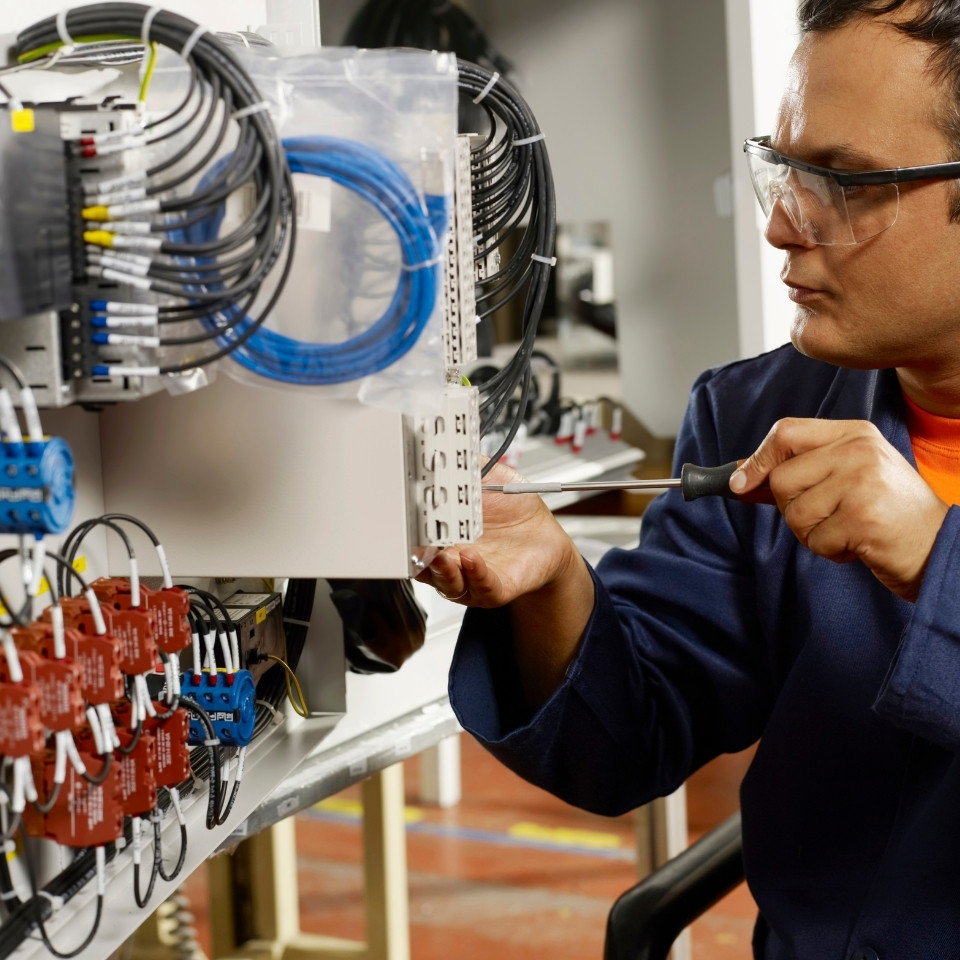
Develop the critical skills needed to diagnose and troubleshoot complex industrial electrical and control systems. Learn systematic approaches to identifying faults, interpreting schematics, and restoring automated systems to operation in high-demand industrial environments.
B.S. Electrical Engineering Degree Opportunities

Students may have the opportunity to continue their education toward a degree to open further career opportunities.

Electrical Career Pathway

Start by completing the Industrial Automation Technology program and find entry level employment in the electrical field. Work in the field while pursuing a B.S. Electrical Engineering degree in the evenings. At the end you will have a diploma, a degree and work experience.

Learn more about BSEE program.
Degree Topics Include: Digital Electronics, Semiconductors and Circuits, Programming, MATLAB, Signal Analysis, Computer Aided Drafting (CAD), 3D Modeling with SolidWorks, Embedded Systems, Robotic Engineering, Control Systems, Electric Machines, Power Systems, Power Distribution, Power Protection, Senior Capstone Project and much more.

Support to Reach Your Goals

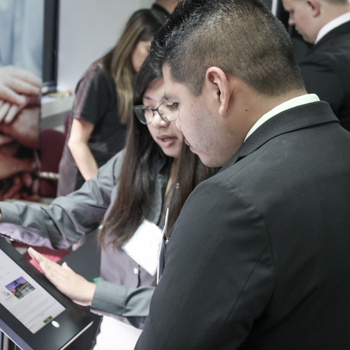
The Student Services and Career Services Offices support you on your educational path to greater career opportunities.

  • Student Support 9
  • Student Support 10
  • Student Support 3
  • Student Support 4
  • Student Support 5
  • Student Support 6
  • Student Support 5

Academic Support: Advisement, academic monitoring, tutoring, and more...

Career Support: Resume assistance, career workshops, job leads, and more...

Visit
The SCIT Campus!blue underscore

Meet our staff and faculty,
tour our classrooms and labs, and
learn about our programs.

Call, email or request info to schedule.

CALL ADMISSIONS

SEND AN EMAIL

BOOK AN APPOINTMENT

Visitation appointments are usually made on Mondays-Fridays, between 10am and 5pm (except holidays).